

If you’re building in Los Angeles County, there’s one step between finishing the plumbing and turning the water on that trips up a lot of projects: new construction chlorination. It’s required by the California Plumbing Code, inspectors and water purveyors check for it, and a failed lab result can push your final inspection back by days.
Here’s what builders, plumbers, general contractors and developers in Los Angeles need to know to get it done right the first time.
The short version: California Plumbing Code Section 609.9 requires every new or repaired potable water system to be disinfected before use: filled with chlorine solution at 50 ppm for 24 hours (or 200 ppm for 3 hours), then flushed until the chlorine level matches the supply water. Most inspectors and purveyors also want a bacteriological (Bac-T) lab result showing no coliform bacteria. Book it 5 to 7 business days before your target inspection.
What Is New Construction Chlorination?
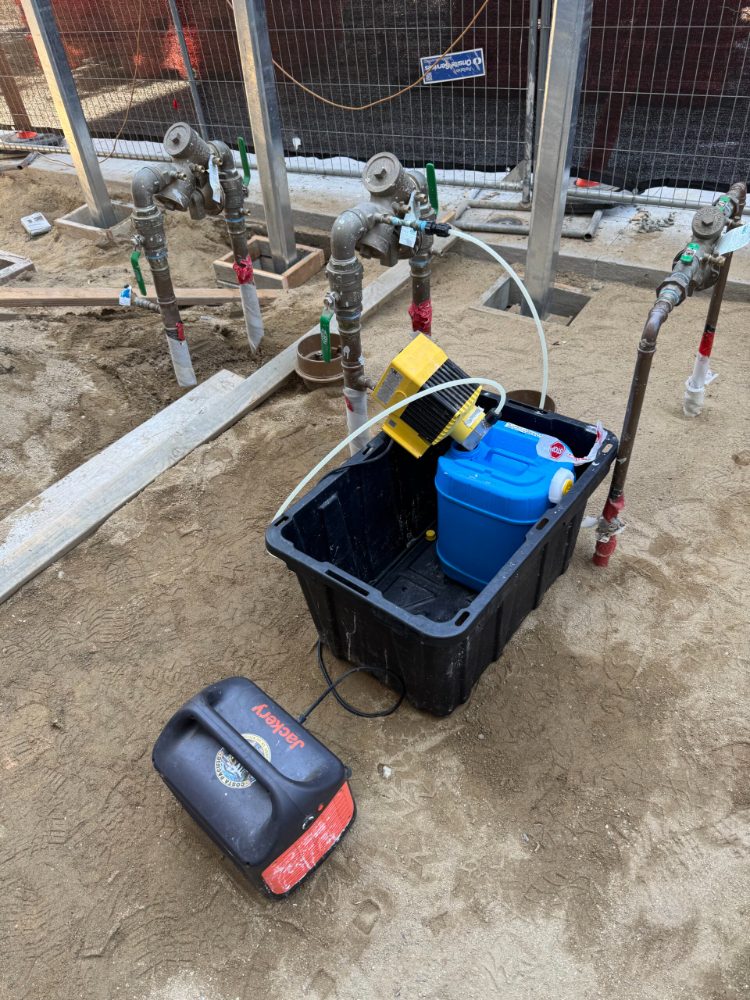
New construction chlorination, also called waterline disinfection, is the process of filling newly installed potable water lines with a chlorine solution to kill bacteria and other contaminants that get in during installation. The solution holds in the pipe for a set contact time, then the lines are flushed until the water is back to normal drinking-water chlorine levels and samples are sent to a certified lab.
Every new potable water system, from a single-family home to a multi-story mixed-use building, has to be disinfected before it can pass final inspection and be put into service.
Why Is It Required?
During construction, open pipe ends are exposed to dirt, debris, insects and standing water. Bacteria can grow inside untreated pipe, and without disinfection that contamination goes straight to faucets, showers and drinking fountains the day the water is turned on.
California Plumbing Code (CPC) Section 609.9 requires disinfection of new and repaired potable water systems before use. In Los Angeles County, the plumbing inspector (LADBS in the City of Los Angeles, or your city or county building department elsewhere) signs off on the building side, and the water purveyor, such as LADWP, Long Beach Utilities, Pasadena Water & Power, Glendale Water & Power, Golden State Water or Cal Water, sets the sampling and paperwork it needs before it accepts a new main or service. No passing lab result usually means no sign-off.
The Standards That Apply in LA County
- CPC 609.9 (building plumbing): chlorine solution at no less than 50 ppm held for 24 hours, or no less than 200 ppm held for 3 hours, then flushed until the residual matches the supply water. The procedure is repeated if the lab results show contamination.
- AWWA C651 (water mains and service lines): the standard most purveyors reference for new mains, fire lines and repairs. It sets the chlorine dose, contact time, flushing and the bacteriological sampling sets required before the main goes into service.
- AWWA C652 (storage tanks): applies when a project includes a potable water storage tank.
- Bacteriological testing: after flushing, samples go to a state-certified lab and must show no coliform bacteria. Some purveyors also require a heterotrophic plate count (HPC).
- Documentation: a chlorination report with chlorine concentrations, contact times, flush readings and lab results, formatted for your inspector or purveyor.
Submission requirements differ from city to city and purveyor to purveyor, but the core process is the same. If you’re not sure what your jurisdiction wants, ask your inspector at the rough-in, or call us and we’ll tell you what we’ve seen them require.
When Does Chlorination Happen in the Construction Timeline?
Chlorination usually happens:
- After the plumbing is complete and has passed its pressure test
- After all connections are made, with no open ends
- Before the final plumbing inspection and before anyone drinks the water
It’s one of the last steps before occupancy, and scheduling it too late is one of the most common mistakes we see. If a lab result comes back positive, the line has to be re-chlorinated and re-sampled, which can add several days.
Pro tip: schedule chlorination at least 5 to 7 business days before your target inspection date. That leaves room for lab turnaround and a re-test if one is needed.
Common Mistakes That Fail the Lab Test
On new construction jobs across Southern California, these are the problems we run into most:
1. Leaving pipe ends open during construction
Open pipe collects dirt and bacteria. Cap or plug open ends as soon as each section is installed.
2. Skipping the pre-flush
The system should be flushed before chlorine goes in to remove loose sediment. Debris left in the line shields bacteria from the chlorine.
3. Cutting the contact time short
Chlorine needs the full contact time to work. Draining the line a few hours early is one of the easiest ways to fail a Bac-T sample.
4. Poor sample collection
Samples have to be pulled into sterile bottles from the right taps, handled correctly and delivered to the lab on time. Sloppy sampling causes false positives that cost you a re-test.
5. Doing it without the right equipment and paperwork
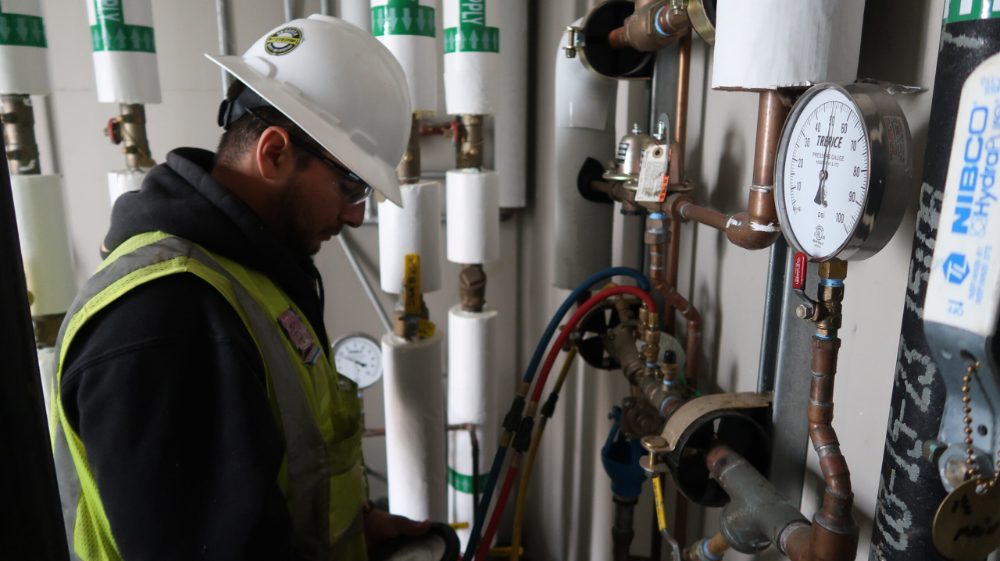
Chlorination looks simple, but getting the dose, contact time, dechlorination and flushing right, and producing a report your inspector and purveyor will accept, takes the right equipment and experience.
What About Remodels, Repairs and Tie-Ins?
It isn’t only new buildings. In Los Angeles County, work on existing potable water lines often triggers the same requirement, including:
- Adding new water lines during a remodel
- Replacing corroded or damaged sections of pipe
- Tying a new service or fire line into a public water main
- Reactivating a line that has sat unused
If you’re pulling a plumbing permit, ask your inspector whether chlorination and bacteriological testing will be required. In most cases the answer is yes.
How We Handle New Construction Chlorination in Los Angeles
California Backflow & Chlorination provides waterline chlorination across Los Angeles County and the rest of Southern California, including Long Beach, Orange County, the Inland Empire and San Diego. Every job includes:
- Pre-flush of the new lines to remove construction debris
- Chlorine injection at the concentration your code or purveyor requires
- Monitored contact time so the full system is disinfected
- Dechlorination and flushing so discharge meets local requirements and the water is back to normal levels
- Bacteriological sampling delivered to a state-certified lab
- A chlorination report ready to hand to your inspector or purveyor
We work with general contractors, plumbing companies, developers and public agencies, and we schedule around your inspection date, because a missed chlorination appointment usually means a missed inspection.
Related reading
- How long does waterline chlorination take?
- Waterline chlorination in Los Angeles: what contractors and property owners need to know
- Emergency waterline repairs: when you need same-day chlorination
Need a waterline chlorinated or a backflow tested?
We chlorinate new and repaired water lines to AWWA C651, pull the bacteriological samples, and send you a purveyor-ready report. Serving San Diego, Orange, Los Angeles, Riverside and San Bernardino counties.